Published by Adrian Vogel · Reading time: approx. 7 minutes · Last updated: October 2026 · Jurisdiction: Germany
On the kitchen table in their parents' house stand three cups of coffee and lie three lists. Anna's is typed and sorted by room. Ben's is on the back of a shopping list. Clara's is still blank. At the top of both full lists is the same word: piano.
"Nobody but me ever played it," says Anna. Ben stirs his coffee and only after a while mentions that his daughter has been having lessons since the summer. Clara looks across into the living room, where the sheet music still lies on the piano, open at a waltz. Anna lives in Hamburg, Ben in Munich, Clara twenty minutes away. So the coordinating will fall to her. And if it stalls like this over the very first piece, how is it going to work with six rooms, a cellar and an attic?
Clara, Anna and Ben are made up; their story is an example.
Before you start: Guidance under German law, no legal advice and no tax advice. OWNAMIC is a documentation aid. Disclaiming, shares, a compulsory share, balancing payments and your written agreement are for a notary or a specialist inheritance lawyer. For every sibling: 14-day free trial, no payment details; paid afterwards, cancel any time.
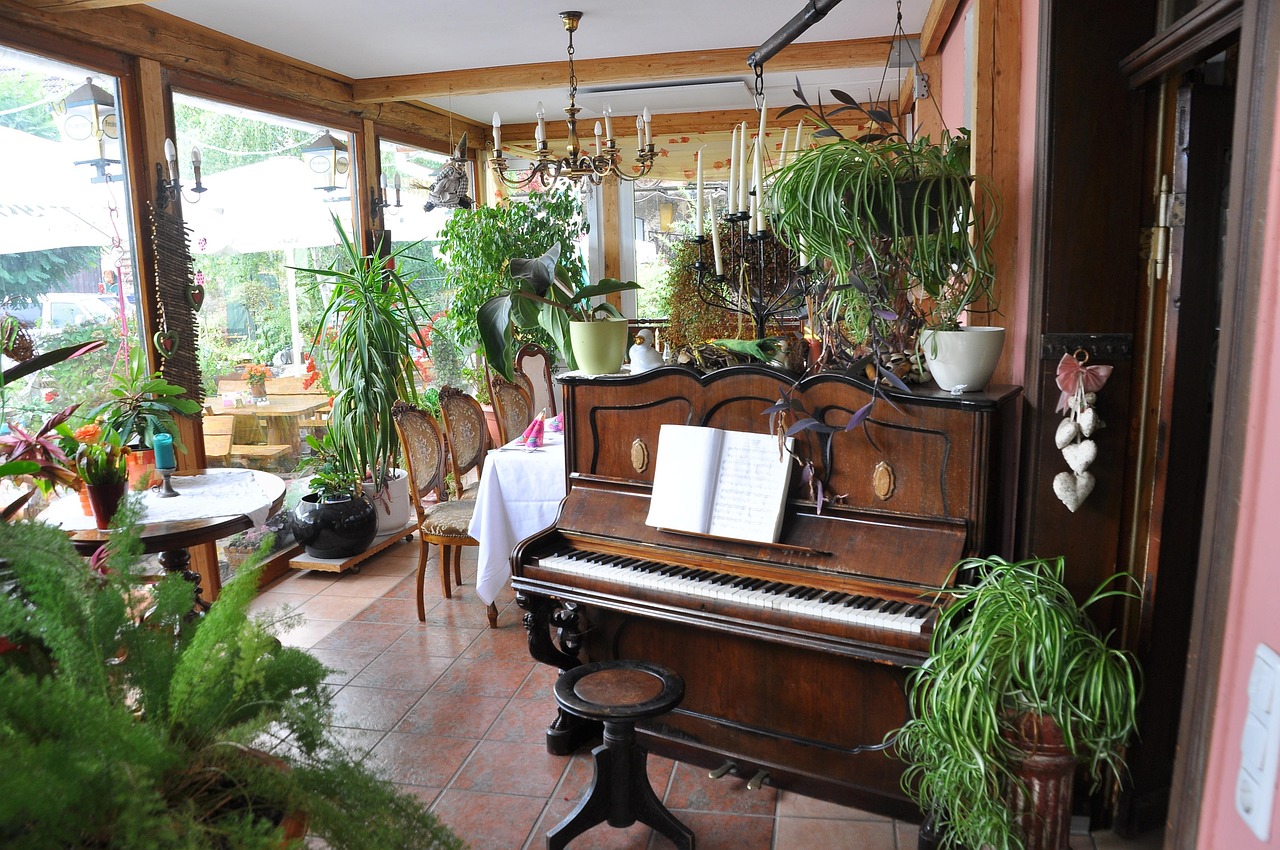
The piano comes back to the table later
Clara suggests putting the piano aside and agreeing the rules first. Know the rule before you know who wants what, and there is less to argue about.
When several people inherit, they form a community of heirs (Erbengemeinschaft). Everything your parents left belongs to all of you jointly (§ 2032 BGB). You manage the estate together (§ 2038 BGB) and decide about each item only together (§ 2040 BGB). Nobody sells, gives away or throws out anything alone.
Each co-heir can in principle demand the division at any time unless the will says otherwise (§ 2042 BGB). Without an agreement, the law allocates equal parts by drawing lots (§ 752 BGB). Whatever cannot be divided is sold, furniture by public auction, and you share the money (§ 753 BGB). Rarely sensible for household goods. So: agree.
At the table, they settle five questions:
- What does the will say? Instructions on who gets what ("Paul gets the watch") and specific bequests come first.
- Does anyone want to disclaim? You have six weeks from the day you learn of the inheritance, six months in cases involving another country (§ 1944 BGB). After that, it counts as accepted. Even clearing out a home can count as accepting. Anyone still deciding does not help clear.
- Who coordinates? Clara, in her OWNAMIC account.
- How will things be shared out? With points and a balance.
- Which value counts? The estimate from OWNAMIC, and an appraisal above a threshold.
On tax: children are in tax class I, and for them household goods up to €41,000 per recipient are exempt from inheritance tax. For other movable items such as a car, the limit is €12,000 (§ 13 ErbStG). Cash, securities, coins and precious metals do not count.
About the app: every object in OWNAMIC belongs to exactly one account. So the house sits in Clara's inventory, though under inheritance law it belongs to all three. A shared space holds at most five members, each with their own account. The trial is enough for Anna and Ben to join, and they can still read the space afterwards.
Try it now
Free for 14 days, no payment details. All you need is your email address.
Registration is subject to our Terms and Conditions and Privacy Notice.
Steps 1 and 2: Clara records the house room by room
Next weekend, Clara uses Plus, Manual and Template to pick "Home" and "Order & Legacy". The first structure is "Berger family home"; she adds cellar and attic with Add your own. The second, "Sharing out the house", holds three collections: Keep, Sell or give away and Discard.
First she photographs each room as it is, then films it, one room per video. Cupboards get a Photo series, jewellery, watches and porcelain Detail shots with the hallmark. Under "What the photo cannot show" she adds what only the family knows: "wedding present from Grandma". The valuation type stays on "Market observation", the second-hand price the three settle up with.
OWNY suggests, Clara confirms: after a look at the maker's plate, "keyboard instrument" becomes "upright piano, built 1974". Recognised objects use AI credit, manual entries none.
Ben already has their father's watches. He records them in his own account and adds them with Contribute your objects.
Step 3: Hamburg and Munich see the same list
Clara creates a New space under Shared Spaces and switches on Include financial data, so everyone sees the same values. She also switches on Share “Intended for”, Share status and Share events. Under Contribute objects she picks both structures with everything inside.
She sends the invitation text to the family chat herself; it is valid for 14 days. Anna and Ben tap Accept and become Viewers: they see every room, photo and value, but cannot change, delete or export Clara's objects. Documents show in a space only if Clara releases them for her contribution.
Step 4: For the silver cutlery, everyone gets the same figure
Everyone now sees the same Total value. OWNY's values are non-binding estimates, not appraisals, and objects without an amount are left out of the total. Anything under €200 they take as is. For important pieces, Clara triggers Re-estimate; only she as the owner can. Real valuables get an appraisal.
Ben thinks the silver cutlery is solid, Anna says plated. The hallmark settles it, and the calculator gives a figure at today's price, the same for everyone.
Step 5: On the deadline, all wishes are in the open at once
The space has no wish list or voting. So each sibling sends Clara their wishes privately by a set deadline, in order of priority. Nobody can adjust theirs to the others'.
Clara records each wish on the object as a Special Event. Because the space shares events, everyone sees the same wishes.
By the deadline, the piano has two entries: "Wish: Anna (priority 1)" and "Wish: Ben (priority 1)". Out in the open, the same for both.
Step 6: The points decide, and everyone can see it
Anything only one person wants is allocated. Otherwise the kitchen-table rule applies: everyone spreads 100 points across their wishes, the higher stake wins, a tie goes to lots. Whoever takes a valuable item has the agreed value counted against their share; for larger amounts, settle that with a notary or specialist lawyer.
For the piano, Anna staked 45 points, Ben 30. Anna takes it over, counted at €400, as agreed beforehand.
Clara records the result under Sort in the Order & Legacy edition, room by room: Keep for herself, a sibling's name under Intended for plus Sell or give away for them, the same without a name for anything sold or donated, Discard for the rest.
Then she exports "Sharing out the house" as a PDF Collection file: a cover page listing every piece, then each piece with its story and whom it is intended for. It is the basis for their written agreement, not the agreement itself.
Steps 7 and 8: The piano moves to Hamburg, the rest goes out
Anna has her own account, so Clara taps Transfer to someone on the piano and leaves the values in, since they count for the balance. Once Anna accepts, images, files, events and estimates go with it. This cannot be undone. Without an account, Clara would record Gifted with a note: "Taken over in the division of the estate, counted at €400". Legally not a gift, just the app's wording.
What nobody wants, Clara may sell on everyone's behalf. OWNY drafts ads for single items; she publishes them herself. A charity shop collects the good furniture. For the rest they get quotes from house-clearance firms: fixed price, "broom-clean" handover.
The Letting-go balance counts what is sold, gifted and donated, with the Total proceeds. Those belong to the community of heirs; the three divide them themselves.
Step 9: In the end, every item has a note
Only Clara can export, so she does it for everyone: a New export of both structures with all files under My documents. The ZIP file holds a PDF report, tables and all receipts. OWNAMIC keeps it for 30 days; Clara sends it to both.
Eleven weeks after that afternoon, the house is broom-clean. "Sharing out the house" holds 214 items: 58 shared among the three of them, 41 sold, 37 donated, the rest collected. The letting-go balance shows €1,860 in total proceeds.
The piano is in Hamburg. Ben's daughter has the metronome and the sheet music folder, each with "Intended for" and an entry in its history. They disagreed twice more, but never about what was actually there.
Read on: Dividing an estate · Passing on and planning ahead · Sharing is Caring – When Ownership Concerns More Than One Person
Try it now
Free for 14 days, no payment details. All you need is your email address.
Registration is subject to our Terms and Conditions and Privacy Notice.
Sources
- § 2032 BGB, community of heirs (German): gesetze-im-internet.de
- § 2038 BGB, joint management of the estate (German): gesetze-im-internet.de
- § 2040 BGB, disposal of estate items (German): gesetze-im-internet.de
- § 2042 BGB, division of the estate (German): gesetze-im-internet.de
- § 752 BGB, division in kind (allocation by lot) (German): gesetze-im-internet.de
- § 753 BGB, division by sale (German): gesetze-im-internet.de
- § 1944 BGB, period for disclaiming (German): gesetze-im-internet.de
- § 13 ErbStG, tax exemptions (household goods) (German): gesetze-im-internet.de
- Bavarian Ministry of Justice: Erben und Vererben (brochure, German): justiz.bayern.de
- Local Court of Rheine: leaflet on disclaiming an inheritance (German): ag-rheine.nrw.de
- IWW: community of heirs, dividing the estate (sale by auction, taking over at estimated value) (German): iww.de
- Biallo: how valuables are shared fairly among heirs (German): biallo.de
- Börse Online: clearing a home, which rules apply (German): boerse-online.de
- anwalt.org: private house clearance, costs and process (German): anwalt.org
Deadlines, allowances and rules can change. They also depend on the individual case, such as the will. The information reflects the general position as of October 2026. If in doubt, clarify the details with a notary, a specialist inheritance lawyer or a tax adviser.