Published by Adrian Vogel · Reading time: approx. 5 minutes · Last updated: November 2026
The stamp costs €1.50, and Lars is sure he hasn't got it. Blue, neatly perforated, a bridge as its motif, postmarked. At the swap meet in the parish hall he slips it into a glassine envelope and drives home pleased.
In the evening he opens his old stockbook, the blue one with the scuffed spine from his school days. On page seven he finds the same stamp. On page twelve, again.
Next to the book stands a shoebox from the flea market, €20 for "a few hundred stamps", half of it not yet looked through. And a second stockbook in which his father once collected stamps from all over the world. Lars took the hobby up again because he enjoys it. Right now, though, he knows neither what he has nor what he is missing.
Lars is made up; his story is an example.
Before you read on: OWNAMIC does not check authenticity and buys nothing. Values in OWNAMIC are non-binding estimates with a range and a date, drawn from publicly observed listings. Listings are asking prices, not achieved prices. Not an appraisal, no recommendation to buy or sell. The Michel catalogue is named as an example; the information is not confirmed by its publisher.
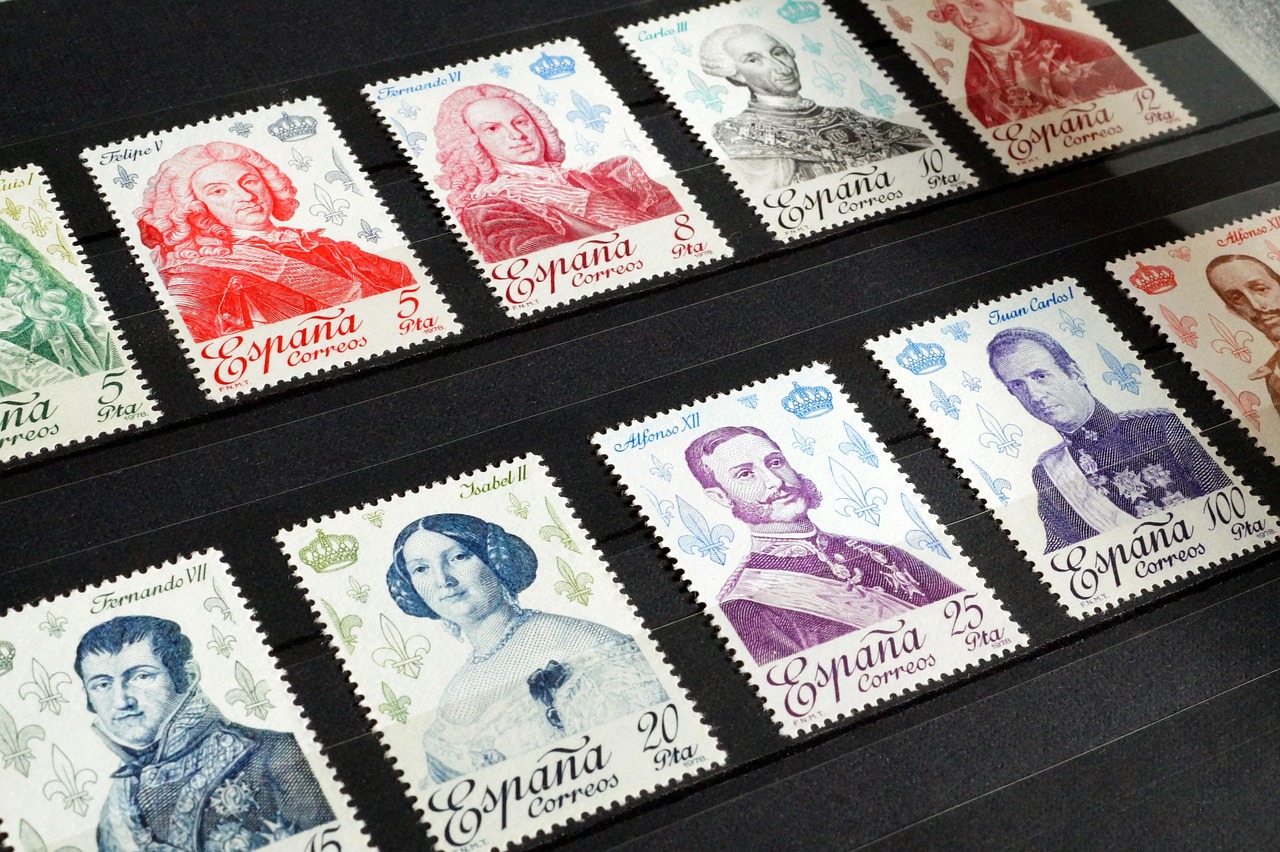
A collecting area turns a shoebox into a collection
If you collect stamps without setting yourself a limit, sooner or later you collect everything. That is why most collectors settle on a collecting area: one country, one period or a theme such as railways or birds.
One evening Lars sorts everything roughly into three piles: West Germany, abroad, the rest. West Germany is the biggest pile, and it matches his childhood albums. That becomes his collecting area: Federal Republic, used. The stamps from all over the world stay in his father's book, just as he arranged them.
On the one hand it feels like giving something up. On the other, only now can Lars say whether anything is missing. A collection without a limit has no gaps, just an edge that keeps moving outwards.
Within the area he orders the stamps the way German-speaking collectors usually do: by the Michel catalogue. It has existed since 1910, and every stamp in it has its own number that collectors, dealers and auction houses all understand (Briefmarkenmesse Essen, in German). Lars borrows an older edition from the town library.
Try it now
Free for 14 days, no payment details. All you need is your email address.
Registration is subject to our Terms and Conditions and Privacy Notice.
Lars sticks with the stockbook, for now
There are two common ways to keep stamps. In a stockbook you slide them into clear strips of glassine or film, with protective interleaves between the pages (Wikipedia: Briefmarkenalbum, in German). You can rearrange at any time. In a printed album every stamp has its own printed space. A gap shows at once, but anything the album did not plan for fits badly (ibid.).
Lars weighs it up. A printed album would show him the gaps. But his collection is still on the move, and supplement pages for every year cost money. He sticks with the stockbook and buys a second one with black pages. He wants to see the gaps another way.
When he moves stamps around, he uses tongs with rounded tips. Skin oil from your fingers slowly damages the gum, the adhesive layer on the back (Briefmarkenmesse Essen: postfrisch, in German). The albums move from the cellar to the living-room shelf: dry, dark, evenly warm. High humidity makes gum stick, direct sunlight fades the colours (ibid.).
One stockbook page, one photo
So that he can check while he is out, the collection goes onto his phone. In OWNAMIC Lars taps Plus, chooses Template under Manual and then the "Collectibles" template. He calls the collection "Federal Republic used" and a second one "Dad's album".
Then he photographs page after page via Plus → Photo/Video, in daylight and straight from above. On a stockbook page, the AI assistant OWNY recognises the stamps in the photo and creates each one as its own item. Lars confirms or corrects. Each recognised stamp costs one credit point from his AI credit.
OWNAMIC has no separate field for the Michel number. So Lars puts it in the name, always in the same order: area, number, condition – for example "Federal Republic MiNr. 412, used". If he has a stamp twice, the second copy gets the tag "duplicate". That way he can later find everything he can take along to swap. How to record photos and catalogue numbers carefully is explained in more detail in Digitise a collection.
You can try out what recognition looks like on a stockbook page here with a photo of your own. The first photo works without an account:
"What is missing?" shows gaps that blur in your head
After three evenings both stockbooks and half the shoebox are recorded. On the page of the collection "Federal Republic used", Lars taps Find out under "What is missing?". OWNY compares the contents with typical collections of the same kind and suggests what might be missing: essentials first, then common additions, then rare extras. It also shows an estimated completeness. The comparison costs 5 credit points.
To be honest, this is an AI estimate, not a want list from the catalogue. OWNY can be wrong, and for a narrowly defined area the Michel is more precise. Lars takes the suggestions as a starting point. He looks up three issues from the sixties in the catalogue, and two of them really are missing. He writes them on a slip of paper that lives in the stockbook.
What else OWNAMIC offers stamp collectors, such as the collection file as a PDF, is on the page Stamp collection.
At the next swap meet Lars checks his phone first
Four weeks later he is back in the parish hall, in front of a box of stock cards at 50 cents each. Each card shows the Michel number. Whenever he is unsure about a stamp, he types the number into "Search objects...". If it appears in the name of an item, he puts the card back.
In the end he buys five stamps instead of the nine already in his hand. One of them is one of the two gaps from the slip of paper. He has brought his duplicates and swaps them for two stamps offered by an older gentleman at the next table.
The second half of the shoebox is still waiting. Whether he keeps the foreign stamps in it or passes them on, Lars does not know yet. The blue bridge stamp now sits in the stockbook once. The other two copies are in the envelope for the next swap meet.
Read on: Avoiding duplicate purchases · Finding out what things are worth
Try it now
Free for 14 days, no payment details. All you need is your email address.
Registration is subject to our Terms and Conditions and Privacy Notice.
Sources
- Briefmarkenmesse Essen, glossary: Michel-Katalog (standard reference since 1910, Michel number as identifier), in German: briefmarkenmesse-essen.de
- Briefmarkenmesse Essen, glossary: postfrisch (tongs instead of fingers; storage dry, dark, at an even temperature), in German: briefmarkenmesse-essen.de
- Briefmarkenmesse Essen, glossary: Gummierung (sensitivity of gum to temperature and humidity), in German: briefmarkenmesse-essen.de
- Wikipedia: Briefmarkenalbum (stockbook and printed album), in German: de.wikipedia.org
The storage advice is general. For valuable pieces, ask an expertiser or a specialist dealer.