Published by Adrian Vogel · Reading time: approx. 4 minutes · Last updated: November 2026 · Jurisdiction: Germany
Murat's basement holds 31 moving boxes, and nine of them say "Misc". When he goes looking for the fairy lights for the balcony in October, he opens four of them. He finds two toasters, a waffle iron and his school-leaving certificate, but no fairy lights.
Murat has lived in the flat for six years, and the boxes have stayed shut since the move. He would like a workbench against the back wall. But he wants to know what is down there before he throws anything away, and he does not want to give up whole weekends for it either.
Murat is made up; his story is an example.
Before we start: The notes on disposal and selling reflect Germany as of November 2026. What applies to you is set by your municipality and waste service. Whether a sale counts for tax, you clarify with a tax adviser or the tax office. Trial: try it free for 14 days, no payment details; paid afterwards, cancel any time.
Murat films one shelf an evening, not the whole basement
"Put it in the basement" used to be the end of every decision. Murat turns that around, as in the workflow Declutter the basement: first see, then decide, then label.
OWNY, the AI assistant, evaluates up to 24 frames from a video. That is enough for one shelf, not for the whole basement. And without light, OWNY recognises "box, box, box". Murat sets up a work light.
The structure is quick: Plus, Record without photo, Template. "Home" sets up the basement among other rooms, "Order & Legacy" the three piles Keep, Sell or give away, Dispose. Every shelf becomes a collection of its own.
A video pass costs about 40 points, depending on how much is in it. Five shelves are around 200 points, and the trial brings 250. Sorting, piles, labels and events cost nothing.
Try it now
Free for 14 days, no payment details. All you need is your email address.
Registration is subject to our Terms and Conditions and Privacy Notice.
30 seconds per shelf, starting at the top
Murat starts from the shelf itself with Plus, Photo/Video, Video capture, so the finds land there straight away. Camera at chest height, slowly along, a one-second pause at each tier. He stops after about 30 seconds and films a tall shelf in two passes.
The "Misc" boxes stay shut. Murat records them as a box with the tag "unopened", or unpacks them later and photographs the contents as a photo series.
Well over 70 finds become 19 entries
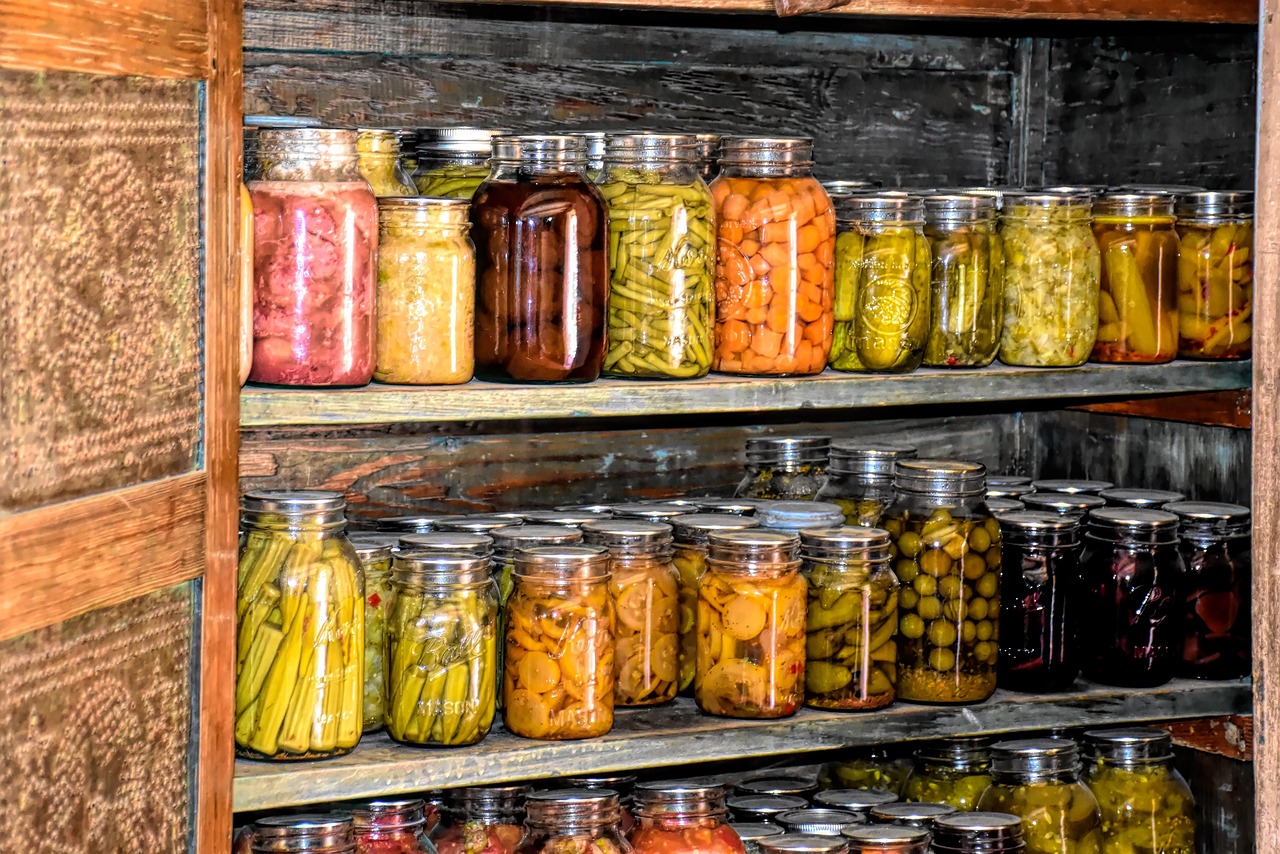
In the review, the basement has one rule more than anywhere else: group. "Christmas decorations, 1 box" instead of 40 baubles, "Preserving jars, 24" instead of 24 jars. What is searched for individually stays individual, like the rotary hammer or the tent.
Murat's second shelf comes out as 19 entries, among them "Cables and chargers, 1 box". The two toasters stay separate, because one is meant to go. Then he taps Save … objects.
Sorting happens in the evening, on the sofa
Murat opens Sort, picks the shelf and swipes: left to keep, up to sell or give away, right to dispose. Not sure yet leaves a piece where it is for a second round.
Two questions help: When did I last use this? Would I know I owned it without this list?
What stays goes into boxes with a QR label
Murat packs by theme: Christmas, camping. For each box he creates an object (Plus, Record without photo, type Collection) and drags the pieces into it in the inventory list. With Print sticker sheet, every box gets a QR label. A scan opens the contents without lifting the lid. Masking tape goes on anyway: the sticker is for him, the pen for everyone else.
Whatever leaves gets an entry with a date
Murat takes the toaster with the scorched cable to the recycling centre, which accepts electrical appliances at no charge. Retailers with at least 400 m² of sales space for electrical goods take back small devices up to 25 cm even without a new purchase, up to three per type. Batteries out first, data deleted.
For the old desk chair he books a bulky-waste collection with the municipality, often at no charge, sometimes for a fee, and enters the pick-up date on the pile. Social department stores take usable things; he asks beforehand what they currently accept. For sales, the photos from the capture are enough. Every item that leaves becomes an entry with a date, and the letting-go balance adds it up.
After eleven evenings, the workbench is in
Five evenings for filming, six for sorting and packing, plus the Saturday morning at the recycling centre. In this example Murat used 190 points. The 31 moving boxes have become 17 boxes with QR labels, and the second toaster and the waffle iron are at the social department store.
The workbench stands against the back wall. The fairy lights, by the way, were in box 4, "Christmas". Murat scanned the label before he lifted the lid.
Read on: Clearing out a parent's home with siblings · Getting organised step by step · The Order & Legacy edition
Try it now
Free for 14 days, no payment details. All you need is your email address.
Registration is subject to our Terms and Conditions and Privacy Notice.