Published by Adrian Vogel · Reading time: approx. 6 minutes · Last updated: October 2026 · Jurisdiction: Germany
Katrin owns three irons and never irons. She found them on a Tuesday evening while looking for a floor lamp for her daughter, who had just moved out: one in the hallway cupboard, one in the cellar, one still in its box under the bed in the old children's room.
Five rooms, 22 years in the same flat. Katrin has started decluttering twice before. Both times a pile marked "To go" stood in the hallway for weeks, until half of it drifted back into the cupboards. This time she wants to do it differently: one room after another, and at the end see what has really left.
Katrin is made up; her story is an example.
Before you start: This guide is not tax or legal advice. The notes on selling, tax and disposal reflect the situation in Germany as of October 2026. What applies where you live is set by your municipality and your waste service. Whether a sale matters for tax, check case by case with a tax adviser or the tax office.
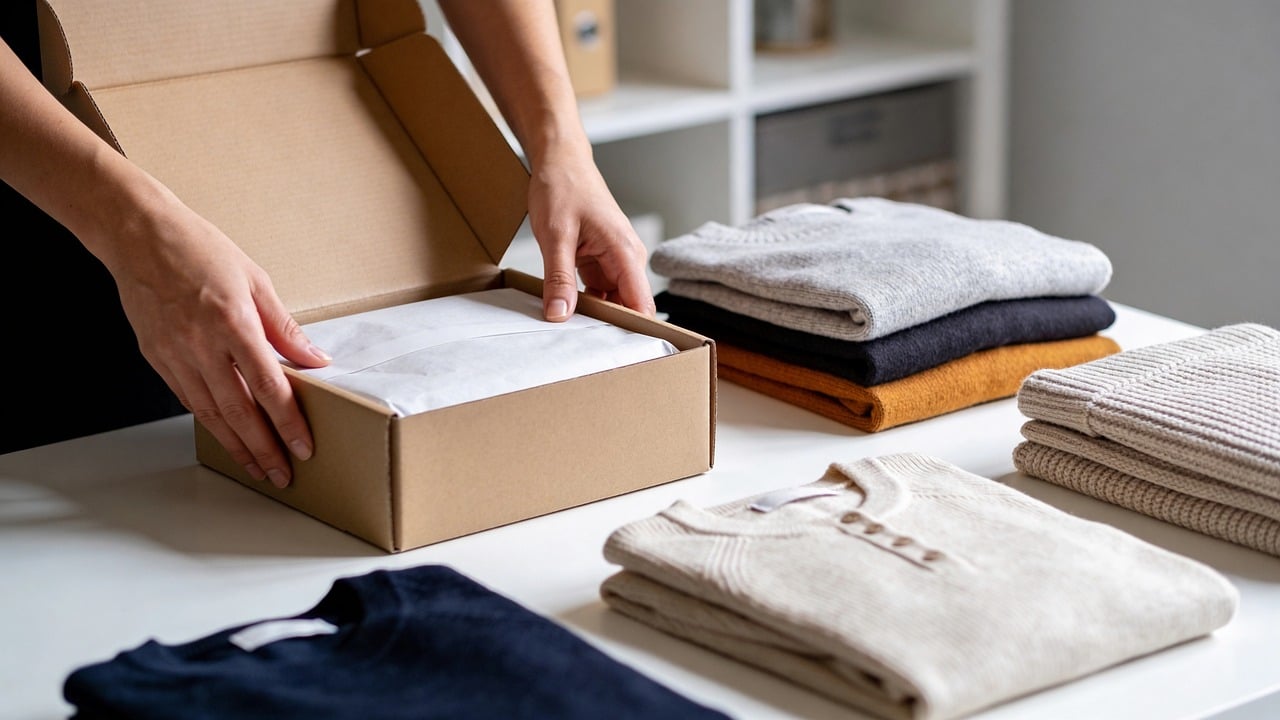
Katrin starts in the hallway, not with the memories
She borrows the three piles of the Swedish method Döstädning, made known by Margareta Magnusson's book: keep, sell or give away, discard. From Marie Kondo she takes the order of difficulty, sentimental items last. That way she practises deciding before the hard pieces come. Hallway and bathroom first, then kitchen and wardrobe, later the cellar and attic.
In OWNAMIC she switches her edition to Order & Legacy in the header. Under Plus, Manual, Template, the "Home" template sets up her rooms; she adds hallway, cellar and attic. The "Order & Legacy" template brings the three collections Keep, Sell or give away and Discard. She also puts three labelled boxes in the hallway.
Step 1: The hallway is recorded in 25 seconds
Katrin has put the other two irons in the hallway beforehand. She taps Plus, Photo/Video and Video capture and pans slowly through the room. OWNY analyses the first 30 seconds and suggests 31 finds; Katrin confirms 27.
Recognised objects use AI credit. For the 60 old paperbacks that are going anyway, Katrin does not need that. With Capture without a photo she records "Box of paperbacks (about 60)" as one object.
Whether she sells or gives something away, she decides with an eye on the estimate. Under "Adjust the analysis" the default is "Market observation": a non-binding estimate drawn from observed listings. A dealer will not necessarily pay that much.
Try it now
Free for 14 days, no payment details. All you need is your email address.
Registration is subject to our Terms and Conditions and Privacy Notice.
Step 2: Two irons go, one stays
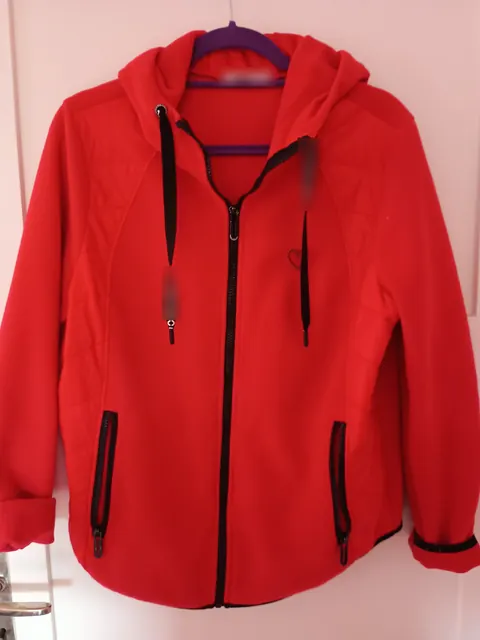
Under Sort, OWNAMIC asks: Which collection are you sorting out? Katrin picks the hallway and swipes on her phone: left for Keep, up for Sell or give away, right for Discard. Try it here, with five jackets and coats from our Döstädning video:
Two irons go up, one goes left. The floor lamp goes up too, and under Intended for Katrin enters her daughter. The pile then shows "Promised".
For her mother's sewing machine she taps Not sure yet, later. The card comes back at the end. Two questions help with each piece: Have I used it in the last year? Am I keeping it because I like it, or out of guilt?
Every decision puts the thing onto a pile in addition. It stays in its room until it is really gone. When the hallway is done, Katrin taps Mark collection as finished.
Step 3: What stays gets a fixed place
The iron that stays is already in the hallway cupboard. Anything in the wrong room you move in the Inventory list with To tray and Drop here.
For heirlooms, Keep has a Write its story button: under What matters to me you record where a piece comes from and what it means to you.
Step 4: Sell or give away, with a deadline this time
Katrin posts the listings herself, using the photos from her records. OWNAMIC is not connected to any platform. What is new is her deadline: two weeks, then whatever is left gets donated.
When something sells, she taps Sold under Sell or give away, enters the Price and saves. Next to it are Gifted, Donated and Transfer to someone, which moves a thing with its photos and story into another account, for example her daughter's.
Three rules to know about private sales in Germany:
- Name defects honestly. As a private seller you can usually exclude liability for defects, but not if you fraudulently conceal a defect or firmly promise a feature (section 444 of the German Civil Code, BGB).
- Platforms report above a threshold. Since 2023 they report sellers with 30 or more sales or €2,000 or more in revenue a year to the Federal Central Tax Office. The report does not say whether tax is due.
- No tax on everyday items. For clothes, furniture or household appliances you pay no tax on the gain (section 23 of the German Income Tax Act, EStG). For jewellery, art or collectibles a gain can be taxable if less than a year lies between purchase and sale. Since 2024 an exemption limit of €1,000 a year applies. If you go above it, the whole gain counts.
Step 5: The toaster goes to the recycling centre, the armchair to bulky waste
In the cellar, an old toaster and a worn-out armchair land on Discard. Katrin enters the bulky-waste date there as Add pick-up date.
- Electrical devices never go in household waste. The recycling centre (Wertstoffhof) and retailers take them free of charge. Under the German Electrical and Electronic Equipment Act (ElektroG), retailers with at least 400 m² of sales area for electrical goods, food retailers from 800 m² and large online retailers must take back small devices up to 25 cm on every side even without a new purchase, up to three per type of device. Remove batteries and delete data first.
- Old clothes: since 1 January 2025, municipalities must collect textiles separately. Wearable items go into a container, to a clothing bank or to the recycling centre. Heavily soiled or worn-out textiles still belong in residual waste, according to the consumer advice centres.
- Bulky waste (Sperrmüll) is booked with your municipality. Often one collection a year comes at no charge; each municipality sets its own rules.
Step 6: After five Saturdays, the balance is in
One room per Saturday. At the top of Order & Legacy collections, the Letting-go balance shows, in her example, 118 things let go, 23 of them sold, total proceeds €410. The deadline cleared the hallway pile; the rest went to the clothing bank and the social department store round the corner.
Sold things still count in the Inventory. So that Katrin can see what is still there, she moves what she let go in the Inventory list into a new collection at the Top level, "Let go 2026". Deleting would be wrong: the events disappear with the object, and the balance is calculated from them.
The sewing machine came back as "later" twice. The third time, Katrin kept it and wrote under What matters to me that her mother sewed the curtains for their first shared flat on it. One iron is still there too. It stands in the hallway cupboard, and the Inventory list says where.
Read on: Declutter your wardrobe · Declutter the basement · Declutter for winter · Döstädning · Clearing out with OWNAMIC
Try it now
Free for 14 days, no payment details. All you need is your email address.
Registration is subject to our Terms and Conditions and Privacy Notice.
Sources
- Marie Kondo: The Life-Changing Magic of Tidying Up (2014; German edition Magic Cleaning, Rowohlt, 2013), order of categories; overview by t-online (German): t-online.de
- Margareta Magnusson: The Gentle Art of Swedish Death Cleaning (2017): margaretamagnusson.com
- German Electrical and Electronic Equipment Act (ElektroG), section 17, take-back duties of distributors (German): gesetze-im-internet.de
- German Environment Agency (Umweltbundesamt): Disposing of old electrical devices correctly (batteries, data; German): umweltbundesamt.de
- Verbraucherzentrale Hamburg: Confusion about the separate-collection duty for old clothes (German): vzhh.de
- Verbraucherzentrale NRW: Old clothes banned from residual waste? Disposing of textiles correctly (German): verbraucherzentrale.nrw
- Verbraucherzentrale Hamburg: Disposing of clothes – where do old clothes go? (German): vzhh.de
- German Income Tax Act (EStG), section 23, private sales transactions (German): gesetze-im-internet.de
- Tax administration of North Rhine-Westphalia (Finanzamt NRW): Platform Tax Transparency Act, reporting thresholds of 30 sales / €2,000 (German): finanzamt.nrw.de
- German Civil Code (BGB), section 444, exclusion of liability (German): gesetze-im-internet.de