Published by Adrian Vogel · Reading time: approx. 5 minutes · Last updated: November 2026
The note is tucked inside the front of the first stockbook, written in pencil: "Michel 1998: approx. 2,300 DM". Timo finds it when he unpacks the three books on his kitchen table. His aunt Renate is moving into a smaller flat, and the stamps were not supposed to go into a removal box.
"Have a look at what they're worth today," she said on the phone. "Christmas is soon enough."
Timo leafs through. Books one and two: West Germany, neatly arranged by year, many stamps several times over. Book three is thinner and older, with brown pages and "Deutsches Reich" on the spine. He knows nothing about stamps. He only knows that 2,300 marks sounds like a lot.
Timo and Renate are made up; their story is an example.
Before you read on: OWNAMIC does not check authenticity and buys nothing. Values in OWNAMIC are non-binding estimates with a range and a date, drawn from publicly observed listings. Listings are asking prices, not achieved prices. Not an appraisal, no recommendation to buy or sell. The Michel catalogue is named as an example; the information is not confirmed by its publisher.
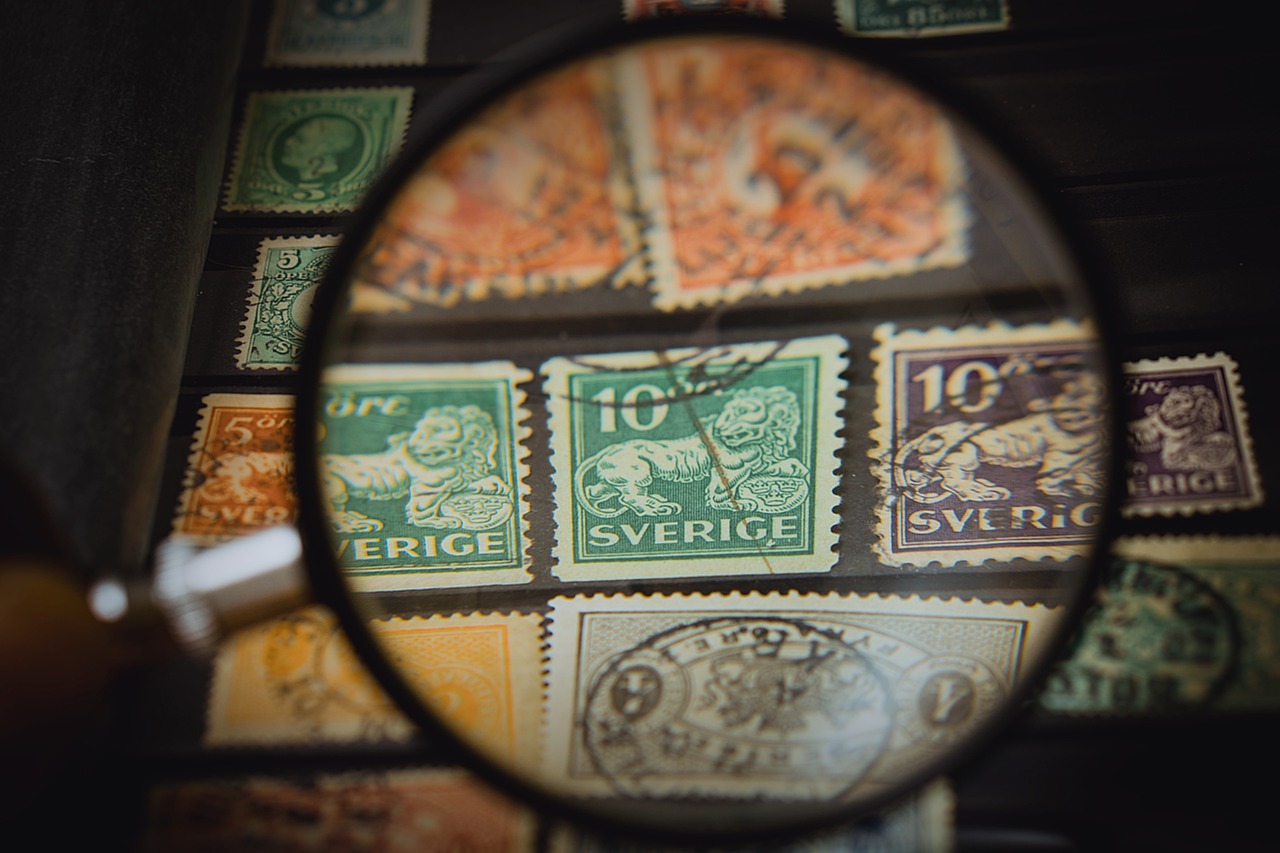
The note gives a catalogue value, not a price
The figure on the note is a catalogue value. Michel is the standard reference for collectors in German-speaking countries. Its prices, though, are theoretical values, not realistic selling prices, writes Stiftung Warentest, the German consumer organisation. Older editions can be borrowed from many public libraries.
The same article has the sentence that resets Timo's expectations: post-war stamps from West Germany, West Berlin or the GDR exist in such numbers that they usually fetch cents. It gets more interesting with pre-war material or "Altdeutschland", the stamps of the German states before 1871 (ibid.).
For Timo that means the two thick books probably make up most of the 2,300 marks and the smallest part of today's value. If anything is hidden anywhere, it is more likely in the thin book.
Try it now
Free for 14 days, no payment details. All you need is your email address.
Registration is subject to our Terms and Conditions and Privacy Notice.
Four questions for every striking stamp
Timo buys a magnifier and a pair of stamp tongs and starts on the third book. For every stamp that looks older or different from its neighbours, he asks four questions.
Which stamp is it exactly? Country, year of issue, motif, denomination. Only then can he find it in the catalogue. Sometimes the perforation alone tells a common variety from a rare one.
Are all the perforations there? Stiftung Warentest gives three rules of thumb: the older, the better, as a tendency. Good condition pays. And intact perforations without a crease or thin spot are an advantage (ibid.).
What is on the back? Mint never hinged means the gum is untouched. That definition comes from the German association of stamp expertisers, the Bund Philatelistischer Prüfer (Briefmarkenmesse Essen). A hinge is a small strip of gummed paper that used to hold stamps in albums. On Altdeutschland stamps it is normal; on post-war West German stamps it often means a clear markdown (Briefmarkenmesse Essen).
Used or not? That is not automatically a drawback. Collectors tend to prefer unused stamps, but a historically interesting postmark can raise the value (Stiftung Warentest).
After two evenings, eleven stamps from book three are in a glassine envelope with a note beside them. Everything else is back in its place.
One photo per page instead of 900 entries by hand
Timo does not want to look up the two West German books stamp by stamp. In OWNAMIC he goes to Plus → Manual → Template and uses the "Collectibles" template to create a collection called "Renate's stamps". Then he photographs each stockbook page via Plus → Photo/Video, one at a time, in daylight and straight from above.
The AI assistant OWNY recognises the stamps in the photo and creates each one as its own item, with a non-binding estimate as a range. Timo confirms or corrects. Each recognised stamp costs one credit point.
Market research only runs above a threshold, €50 by default. Below it, OWNY's estimate is what you get, and for stamps worth cents that is enough for Timo. For the eleven stamps from the envelope he taps Start market research in the review view. That costs 4 more credit points per stamp and shows him a range of observed listings with their sources.
You can try what recognition on a stockbook page looks like with a photo of your own. The first photo needs no account:
What a photo does not show
For three of the eleven stamps the ranges are wide, for one very wide. That is not a mistake. A photo does not reliably show perforation, watermark or a hinge mark, and with old stamps that is often exactly where the difference lies. Stiftung Warentest is mixed about AI as well: for a rough placing by area and period it helps beginners, but it does not replace an expert's look (ibid.).
Timo weighs it up. The stamp with the very wide range could be a common variety or a rare one. An expertiser would settle it, but that costs money and time. The Bund Philatelistischer Prüfer lists 80 active expertisers for 423 areas on its website, as of November 2026. Timo picks the one for the Deutsches Reich and, for now, only asks what an expertise would cost. If a certificate comes back, he attaches it to the stamp as a file of the type Certificate of authenticity.
What else OWNAMIC does for stamp collectors, such as the collection file as a PDF, is on the stamp collection page.
What Timo tells his aunt at Christmas
On the last Sunday before Christmas he shows Renate the collection on his phone. Added up, the two West German books come to a range of €40 to €70 (example figures). Book three is above that; how far depends on the one stamp with the expertiser. It is a long way from the 2,300 marks on the note.
Renate nods. She never kept the West German stamps for the money, she says, but because her husband brought the post home from the office every Monday. The two books stay with her; the new flat has a shelf for them. They will talk about book three once the certificate is back.
Timo puts the pencilled note back into the first book. Next to it there is now a second one, with today's date.
Read on: Organising a stamp collection · Finding out what things are worth
Try it now
Free for 14 days, no payment details. All you need is your email address.
Registration is subject to our Terms and Conditions and Privacy Notice.
Sources
- Stiftung Warentest: Briefmarken, so finden Sie heraus, was geerbte Sammlungen wert sind (Michel prices as theoretical values, post-war stamps usually worth cents, three rules of thumb, AI only for a rough placing), as of 30.06.2026: test.de
- Briefmarkenmesse Essen, glossary: postfrisch (mint status rests on the gum, as defined by the BPP): briefmarkenmesse-essen.de
- Briefmarkenmesse Essen, glossary: Falz (normal on Altdeutschland, often a clear markdown on post-war West German stamps): briefmarkenmesse-essen.de
- Bund Philatelistischer Prüfer e.V. (80 active expertisers, 423 areas, retrieved 19.11.2026): bpp.de
This is general guidance. For valuable or striking pieces, an expertiser or specialist dealer is the reliable place to ask.